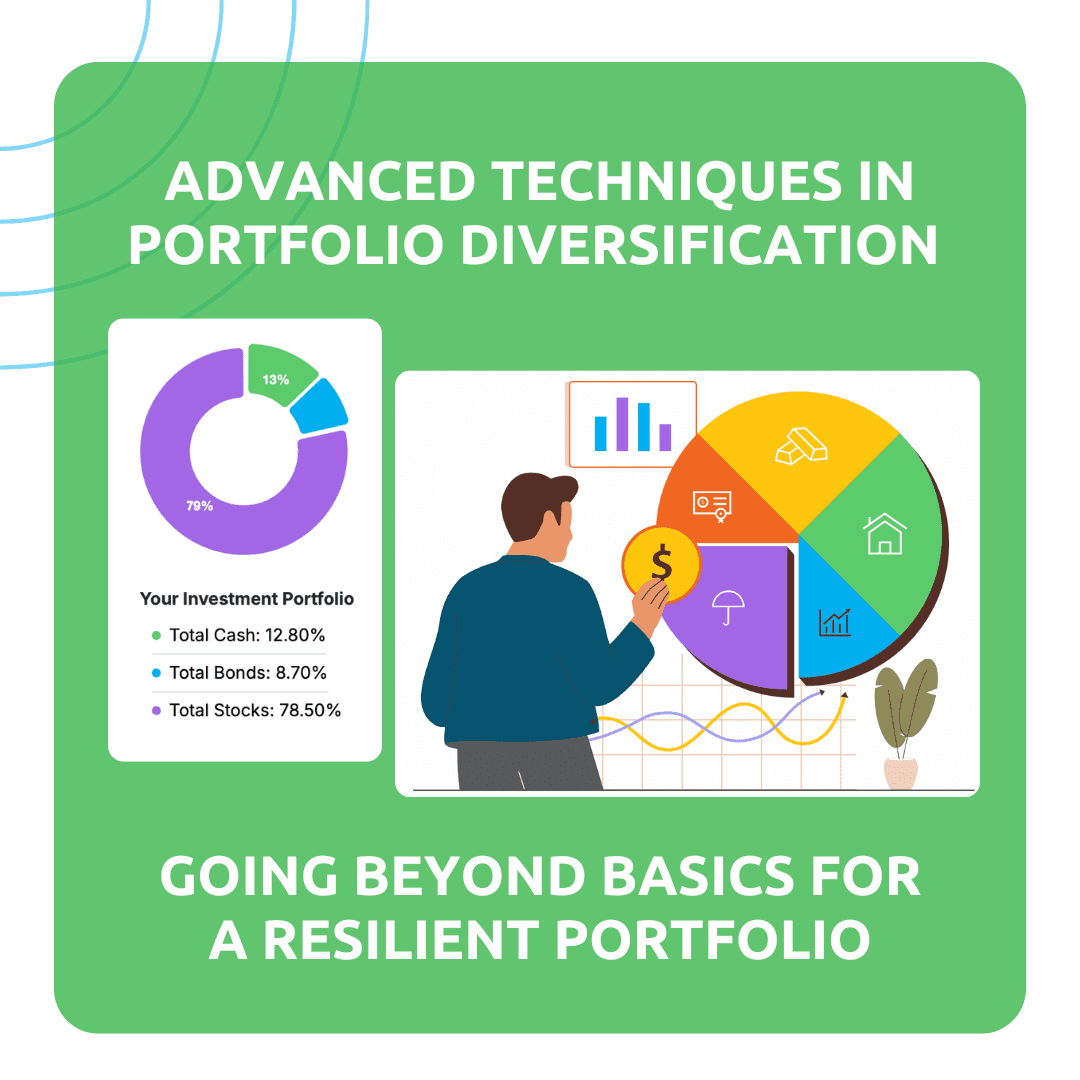
Building a well-diversified portfolio is fundamental to managing risk and enhancing long-term growth. However, for DIY investors, “diversification” is often limited to holding a mix of stocks and bonds, sometimes within a single region or industry. In today’s complex financial landscape, advanced diversification techniques allow building a more resilient portfolio by strategically balancing asset classes, sectors, and geographies.
In this guide, we’ll explore each layer of diversification in detail and show how these techniques help DIY investors create a balanced, robust portfolio that withstands economic fluctuations and maximizes growth potential.
The Pain of Limited Diversification
Many investors believe they’re diversified simply by holding a mix of stocks and bonds. However, without considering additional factors like sector, geographic region, and asset class, portfolios remain susceptible to risks from economic cycles, regional downturns, and industry-specific challenges. Limited diversification can expose investors to a single market’s vulnerabilities or over-concentration in one industry.
Imagine a portfolio that’s concentrated in U.S. technology stocks. While technology can be a strong performer, it’s also susceptible to regulatory changes, economic downturns, and sector-specific risks. Relying too heavily on one sector or region leaves investors vulnerable, which can be especially painful during periods of market volatility.
The Costs of Insufficient Diversification
A lack of diversified exposure can be costly. During market fluctuations, a portfolio with limited diversification may face larger-than-expected losses. If investments are concentrated in one sector or geographic area, even small events—such as changes in regulations, currency fluctuations, or industry disruptions—can significantly impact your returns.
For example, during a recession in one country or economic downturn in a specific sector (such as energy or real estate), an investor with assets tied solely to that country or sector can see disproportionate losses. A properly diversified portfolio, by contrast, has a better chance of weathering these storms, as other asset classes or regions may provide stability and even growth in turbulent times.
A New Approach to Portfolio Diversification
Imagine a world where your portfolio remains steady and resilient regardless of market cycles or regional economic changes. This is possible with a diversified strategy that extends across asset classes, sectors, and global markets. A balanced portfolio doesn’t just mitigate risk—it positions you to capture growth from various sources, taking advantage of opportunities as they arise in different areas.
Advanced diversification techniques allow DIY investors to diversify thoughtfully and strategically, creating a foundation for long-term stability and growth. By building a resilient portfolio that combines diverse asset classes, sectors, and geographic regions, you gain control over market exposure and better protect your investments against volatility.
Diversification Across Asset Classes
Why Diversify by Asset Class?
Each asset class has a unique risk and return profile; combining them is essential for creating a balanced portfolio. Different asset classes—stocks, bonds, real estate, commodities, and alternative assets—perform well under varying market conditions, and blending them reduces overall portfolio volatility.
Stocks (Equities)
Equities represent company ownership and can deliver strong returns, especially over the long term. However, they tend to be more volatile, reacting quickly to changes in economic conditions, interest rates, and global markets. Stocks are ideal for growth but should be balanced with other assets to mitigate risk.
Bonds (Fixed Income)
Bonds are generally considered more stable and provide steady income, balancing the more volatile nature of stocks. They can often hold their value when stock markets decline or even rise as investors seek stability. They act as a buffer during downturns and offer income through interest payments, making them a core component in most portfolios.
Real Estate
Real estate provides income and appreciation potential, often moving independently from stock markets.
Commodities
Commodities like gold, silver, and oil can protect against inflation and perform well during economic uncertainty. These tangible assets hedge against market instability, as they often rise in value when traditional markets decline.
Alternative Assets
Alternative assets include private equity, art, collectables, and even cryptocurrency. These assets add diversity and often have a low correlation with traditional assets, providing returns that may not align with broader market trends. While they carry unique risks, they also offer the potential for high returns, especially in specific market conditions.
By diversifying across asset classes, investors reduce their exposure to the risks inherent in any one category, creating a portfolio with varied sources of growth and resilience. But, be wary of having too high a weight on any one category.
Diversifying Within and Across Sectors
Sector diversification goes one step further by ensuring that investments are spread across various industries. Different sectors respond to economic conditions differently, so investing in multiple sectors helps reduce the impact of industry-specific downturns.
Key Sectors and Their Economic Sensitivities
- Technology: Often a growth leader, especially during economic expansions, but vulnerable to regulatory risks and economic downturns. Tech stocks tend to perform well in low-interest environments where innovation and growth are prioritized.
- Healthcare: Typically stable and defensive, with demand remaining steady regardless of economic cycles. Healthcare is less affected by economic downturns, as medical needs and pharmaceuticals remain consistent, though it can face risks from regulatory changes.
- Energy: Tied to global demand and economic growth, with strong performance in high-demand periods but volatility tied to commodity prices. Energy stocks can perform well when inflation and global demand are high but can suffer when oil and gas prices decline.
- Consumer Defensive (Staples): Defensive by nature, as consumers continue purchasing essentials like food and household products even in economic downturns. This sector tends to hold up well in recessions but may lag during economic booms.
- Consumer Cyclical (Discretionary): Sensitive to economic cycles, as it includes industries like retail, automotive, and leisure that do well in growth periods but can suffer in downturns. This sector tends to outperform when consumer spending and confidence are high.
- Financials: Responsive to interest rates and economic cycles, performing well in stable or rising interest rate environments. Banks, insurance companies, and asset managers benefit from higher rates and an expanding economy but may face challenges in low-rate or recessionary periods.
- Industrials: Strongly linked to economic activity, with sectors like manufacturing, construction, and transportation performing well in expansions. Industrial stocks are cyclically sensitive, often peaking in the middle to late phases of an economic boom.
- Real Estate: Tends to benefit from economic growth and rising property values, as well as moderate inflation. Real estate investments can be defensive, providing income through rents, but may suffer in high-interest environments that increase financing costs.
- Utilities: Generally defensive and stable, as they provide essential services such as electricity, gas, and water. Utilities are sensitive to interest rate changes and can be less attractive in rising rate environments, but they tend to perform well in downturns due to steady demand.
- Basic Materials: Linked to economic growth and global demand, with strong performance in times of high industrial and construction activity. Basic materials are also affected by commodity price fluctuations and can act as a hedge during inflationary periods.
- Communication Services: Includes telecommunications, media, and entertainment, which can perform well during periods of stable growth. Communication services are sensitive to consumer demand and advertising spending, with telecoms typically providing stability while media can be more cyclical.
These sectors have unique economic sensitivities that can provide both growth and stability within a diversified portfolio, helping to reduce the impact of cyclical downturns and capture opportunities during expansions.
Sector Rotation
Sector rotation is an advanced diversification technique that involves shifting investments based on the economic cycle. For instance, growth sectors like technology and industrials tend to excel during economic expansion. In contrast, defensive sectors like utilities and healthcare often provide stability during downturns. Rotating sectors allows investors to benefit from growth cycles and protect gains during contractions, creating an adaptable, resilient portfolio. It is very, very hard to time the market and sector overweights. For most, having a diversified sector allocation with weights like an index is a far more reasonable approach.
By diversifying within and across sectors, investors can capture growth from various industries while avoiding overexposure to any single sector. This balanced approach enhances stability by cushioning the portfolio against sector-specific downturns.
Geographic Diversification: Going Global
Geographic diversification involves investing in assets from different countries or regions, allowing for global economic exposure and reducing reliance on a single country’s economy. Just as sectors respond uniquely to economic conditions, regions and countries also perform differently depending on political stability, economic strength, and market conditions.
Developed vs. Emerging Markets
- Developed Markets: Countries like the U.S., Japan, and Germany are considered stable and mature, with steady growth and lower risk. These markets provide a reliable foundation for long-term growth.
- Emerging Markets: Countries like China, India, and Brazil offer high growth potential, though they come with higher risks due to factors like political instability and currency fluctuations.
Emerging markets can provide significant returns during growth phases but should be balanced with more stable developed markets to mitigate risks. A portfolio with both developed and emerging market exposure can benefit from global growth trends without being overly exposed to high-risk economies.
Buying the Whole Market: Diversification with ETFs
All the sector, asset class, and geographic diversification we have been discussing sounds like a lot of work. A powerful method for achieving extensive diversification is buying the whole market using ETFs, such as Vanguard’s Total Stock Market ETF (VTI) and Vanguard Total International Stock Market (VXUS), and Vanguard Total Bond Market (BND). ETFs like VTI give investors broad exposure to thousands of companies across various sectors and industries, offering a simple way to track the entire U.S. market. By investing in VTI, you gain a stake in large-cap, mid-cap, and small-cap companies without needing to select individual stocks.
Why Use ETFs for Broad Market Exposure?
- Instant Diversification: A single ETF like VTI represents a diverse basket of companies, allowing for broad exposure across sectors.
- Cost Efficiency: ETFs typically have low fees compared to actively managed funds, which helps reduce drag on returns.
- Easy Rebalancing: With broad-market ETFs, rebalancing your portfolio is straightforward, as these funds automatically adjust their holdings to reflect the market index.
- Reduced Risk: Exposure to a wide variety of companies reduces the impact of any single stock’s poor performance, thereby enhancing stability.
Leveraging Total Market ETFs for a Balanced Portfolio
Using ETFs like VTI as core holdings provides a stable, diversified base, reducing the need to continually monitor individual stocks. For DIY investors, pairing a total market ETF with other asset classes like international stocks, bonds, or REITs can create a balanced portfolio that reflects both domestic and global markets. This approach not only manages risk but also positions you to capture growth across sectors, industries, and regions.
Advanced Diversification Techniques in Action
For DIY investors looking to add another layer of diversification, here are some advanced strategies to consider:
- Scenario Testing
Scenario testing allows you to simulate how a portfolio might perform under different economic conditions—such as inflation spikes, recessions, or periods of rapid growth. By modeling various outcomes, investors can identify potential portfolio weaknesses and make adjustments to mitigate risk. - Asset Correlation Analysis
Asset correlation analysis examines how different investments move in relation to each other. For example, stocks and bonds typically have a low or negative correlation, meaning they tend to move in opposite directions. Analyzing correlations helps investors select balanced assets, reducing the risk of correlated losses. - Strategic Rebalancing
Rebalancing involves adjusting portfolio allocations periodically to maintain target diversification levels. Over time, certain assets may grow faster than others, causing the portfolio to drift from its original allocation. Strategic rebalancing ensures that risk exposure remains aligned with your goals, maintaining diversification even as markets shift.
Overcoming the Pitfall of Over-Diversification
While diversification reduces risk, over-diversification can dilute returns. When a portfolio is spread too thin, gains from high-performing assets may be offset by underperforming ones. To avoid this, it’s essential to balance sufficient diversification and focused growth.
- Focus on Quality Over Quantity: Select investments within each asset class that align with your goals and risk tolerance.
- Regularly Review Allocations: Periodic reviews ensure that your portfolio remains balanced and aligned with your strategy.
- Consider Core and Satellite Strategy: For stability, use core holdings like diversified ETFs or broad-market funds and satellite investments like individual stocks or real estate for growth.
By maintaining intentional and strategic diversification, investors can enjoy a balanced portfolio.
The WealthFluent Advantage
Advanced diversification can seem complex, but with WealthFluent’s tools, building a resilient, balanced portfolio becomes accessible. WealthFluent’s personal customizable benchmark constructs a total market diversified investable portfolio for you. Then, the Portfolio Management Tool helps you match the benchmark as closely as feasible and desired. It also enables you to explore actual diversification across asset classes, sectors, and geographies in a structured, user-friendly way.
- What-If Scenarios: Test the impact of different allocations on your portfolio, identifying vulnerabilities and opportunities.
- Dynamic Allocation Framework: Optimize your portfolio with tools that help balance sector, size, asset class, value/growth, and geographic exposure. WealthFluent offers over 60 diversification measures, allowing both high-level and granular control to manage risk effectively.
- Strategic Diversification with Tactical Adjustments: For concentrated positions, WealthFluent enables you to offset that weight by adjusting other areas of your portfolio across any account. This approach allows you to pursue specialized investment opportunities without compromising your broader strategic asset allocation.
WealthFluent is here to simplify advanced diversification techniques, turning complex strategies into actionable steps. With these tools, you can confidently build a portfolio that aligns with your financial goals, manages risk effectively, and prepares you for long-term success.